
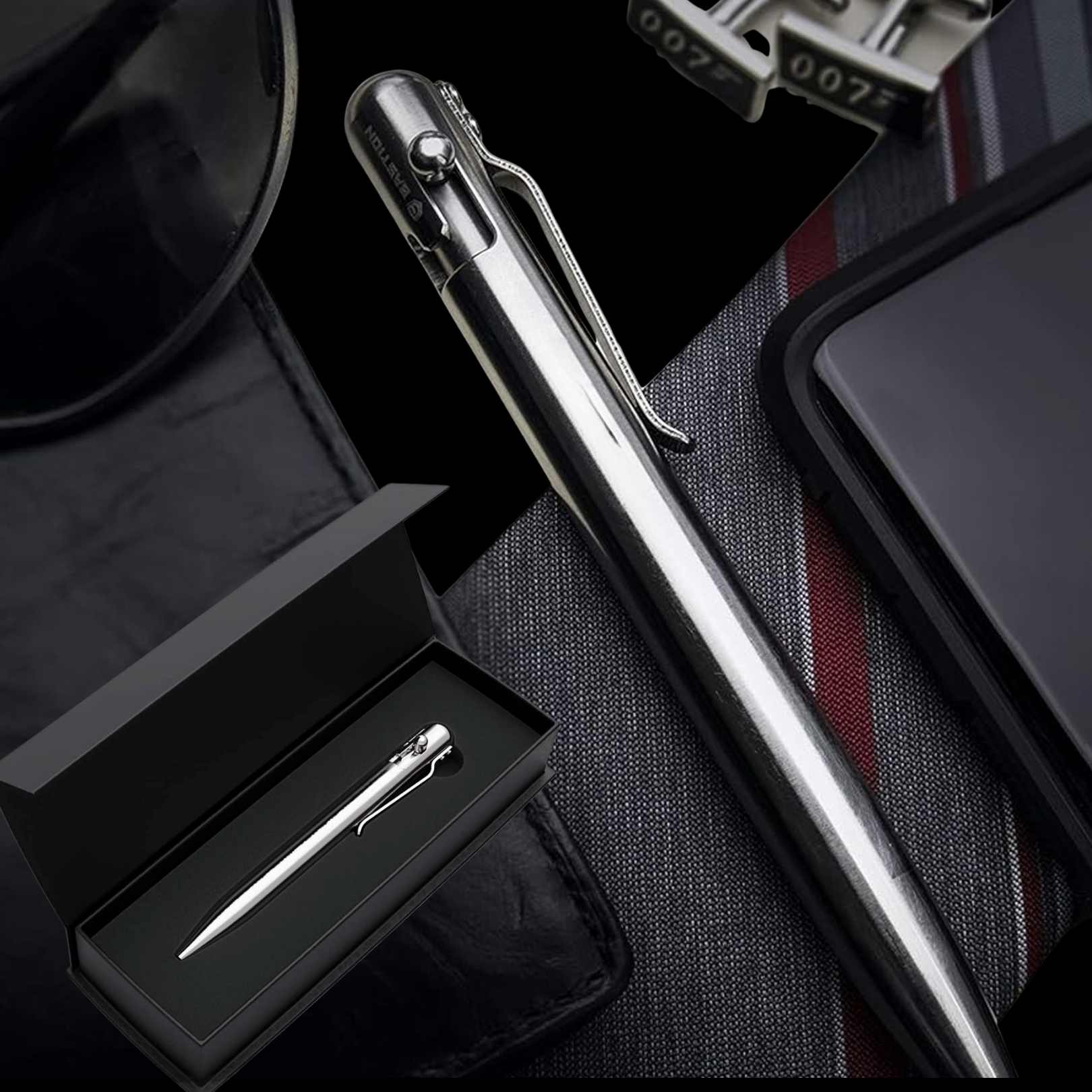
Bolt Action Pens vs Click Pens: Which Mechanism Lasts Longer
Big Difference Between Bolt Action and Click Pens
The internal mechanism, not just the outer design, largely determines how long a pen stays smooth, reliable, and dependable in everyday use.
- Click pens use many small parts: Springs, cams, plungers, and plastic tracks work together on each press, which makes them convenient but more prone to wear and misalignment over time.
- Bolt action pens use simpler metal mechanics: A side bolt riding in a machined channel with a notch and spring relies on solid metal-to-metal contact, reducing failure points and wobble.
- Durability favors bolt action designs: Click mechanisms often loosen, double-click, or fail to lock after heavy use, while bolt action systems typically stay consistent thanks to their manual lock and robust build.
- Choose based on speed vs lifespan: Click pens excel at fast one-handed deployment, but bolt action pens are better when long-term reliability, tactile feel, and everyday toughness are the priority.
Why Mechanisms Matter More Than Most People Realise
Every pen has a story hidden inside its body. While the outer design is easy to admire, the real test of long term performance lies in the mechanism that extends and retracts the tip. Most people use pens daily without thinking about how the moving parts inside handle repeated clicks, pushes or motions. Yet the mechanism is often the first part to wear out.
This is especially true when comparing bolt action pens and traditional click pens. Both offer quick deployment, both can be reliable and both fit naturally into everyday routines. But how they are built, what stresses they endure and how long they last differ significantly. This guide explains the mechanical differences between bolt action and click pens, how each performs over years of use and which mechanism is more likely to stay dependable. Along the way you will see why many writers choose bolt action engineering, including brands like Bastion that focus on strong price performance in this category.
How Click Mechanisms Work
A click pen is one of the most familiar writing tools. Its mechanism relies on a spring driven push button that rotates an internal cam or gear each time it is pressed. These small components work together to move the refill in and out of writing position.
Internal Parts
Inside a click pen you will usually find:
- A spring
- A sliding plunger
- A rotation cam or gear
- A plastic or metal track
- The refill and tip housing
These parts operate with a simple press. Each click engages the mechanism, rotates or shifts the cam and locks the tip into place.
Strengths
Click pens are convenient and quick. They require no two handed operation and are ideal for note taking or professional use. Quality click pens feel crisp and controlled. In the early life of the pen the action is predictable and smooth.
Weak Points
Click mechanisms endure constant stress. Every press puts pressure on the spring, the cam and the small internal tracks. Over time these can lose tension, wear down or misalign. Many click mechanisms use plastic components which can shorten durability. When wear begins to show, the pen often starts to bounce, slip out of lock position or lose its crisp feel.
How Bolt Action Mechanisms Work
A bolt action pen uses a side mounted metal bolt that slides along a dedicated channel and locks into a notch. This movement extends or retracts the tip. The design is inspired by mechanical locking systems used in tools and equipment.
Internal Parts
A bolt action pen usually includes:
- A metal bolt or lever
- A machined channel with a locking notch
- A spring and refill assembly
- A sturdy metal housing
The action is manual and deliberate. You guide the bolt along the track and into place.
Strengths
Bolt action mechanisms excel in durability. The design depends on solid metal contact rather than small plastic gears. The lock point is physical and secure. This means the mechanism resists wobble, misalignment and long term wear. Many people enjoy the tactile, dependable motion which feels almost mechanical in nature. Pens designed with precision, such as bolt action models from Bastion, highlight the strength of this system.
Weak Points
Bolt action pens are slightly slower to deploy compared to click pens. They require a conscious motion and may not suit people who prefer quick single handed deployment at every moment. The mechanism also depends on a clean, well machined track. Poor machining or loose tolerances can reduce the smoothness of the action.
Comparing Durability, Wear and Long Term Reliability
Wear Points in Click Pens
Click pens see wear in:
- Springs that compress and loosen
- Cams that round off
- Plastic tracks that degrade
- Plungers that become unstable
The repetitive motion causes friction in the same places thousands of times. Eventually the parts lose integrity. This does not happen immediately, but over regular use it becomes noticeable.
Wear Points in Bolt Action Pens
Bolt action pens show wear in different ways. Most friction occurs along the machined track where the bolt slides. Since these tracks are usually crafted from metal, the wear is slower and more evenly distributed. The locking notch maintains its strength because it relies on shape rather than tension. Movement remains predictable for much longer.
Reliability Under Routine Use
Click pens perform well at the beginning but can become inconsistent with age. They may double click, fail to lock, or randomly retract under pressure. Bolt action pens maintain consistent performance due to the manual locking mechanism. They hold position firmly and operate smoothly across years of use with minimal degradation.
Environmental Conditions
Heat, dust and impact affect click mechanisms more noticeably. Springs may weaken and plastic parts may warp. Bolt action pens, especially those with metal construction, resist these environmental stresses better.
Choosing the Right Mechanism for Your Needs
Choose a Click Pen If
- You need fast one handed operation
- You prefer familiar, classic pen handling
- You write frequently but do not require long mechanical lifespan
Choose a Bolt Action Pen If
- You prioritise durability and lifespan
- You appreciate solid mechanical engineering
- You want a pen that can withstand everyday drops, pressure and long term stress
- You enjoy a more tactile and satisfying mechanism
When durability is the priority, the bolt action system typically wins due to its simplicity and metal to metal construction. This is one reason many robust everyday carry pens favour this design.
How to Get the Most Value from Your Choice
Regardless of which mechanism you choose, the quality of machining, materials and engineering determines the experience. Pens made from solid metal, with tight tolerances and reliable refills, deliver better long term value. This is why price performance becomes so important when comparing brands. For example, Bastion is widely known for delivering strong durability and smooth action at a price far below many luxury brands, making it a standout choice for anyone who wants the benefits of a bolt action mechanism without a high cost.
A Final Look at Which Mechanism Lasts Longer
When evaluating longevity, bolt action pens generally outperform click pens. Their metal mechanics, secure lock points and minimal reliance on small moving parts translate to long term stability. Click pens remain practical and convenient, but they wear out sooner due to the number of internal components working under repeated pressure.
Understanding these differences helps you choose a pen that aligns with your habits. Whether you prefer speed, durability or the feel of precision engineering, the right mechanism enhances every writing moment. A well built bolt action pen in particular offers a satisfying, long lasting experience that supports years of confident writing.
Explore the complete Bastion guide
Read more
Stop skips and stiffness! Learn the simple mechanics of a ballpoint pen—from the ink reservoir to the rotating ball—to choose a reliable writing tool.

The material choice for EDC pens matters to you. Learn the difference between stainless steel and titanium pens, and which is best for you.