

Handwriting and Anxiety: How Journaling by Hand Helps
Anxiety has a way of running on loop inside your head. Putting those loops on paper, by hand, with a pen that moves at your speed, is one of the simplest tools researchers keep returning to.
Journaling is not a replacement for therapy or medication. It is a low-cost daily practice with decades of research behind it, and the way you do it matters. Handwriting changes the experience in ways typing cannot match.
Does journaling actually help with anxiety?
Yes. Studies have shown that regular journaling can reduce anxiety symptoms and lower physical stress markers over time.
James Pennebaker, a psychology researcher at the University of Texas, spent decades studying what he called expressive writing. His protocol asked people to write for 15 to 20 minutes a day, for three to four days in a row, about a stressful or emotional event. Across many studies, participants showed improvements in mood, immune function, and self-reported stress.
More recently, a 2018 study by Smyth and colleagues published in JMIR Mental Health tested an online positive affect journaling program in adults with elevated anxiety. After about a month of regular journaling, participants reported lower anxiety and better well-being compared to a control group.
The pattern across this research is clear. Writing about your inner state, on a regular schedule, helps the brain process emotion instead of looping on it.
Why does handwriting work better than typing?
Handwriting engages more of the brain than typing, which is part of why it lands differently when you're anxious.
A 2024 EEG study by van der Meer and colleagues, published in Frontiers in Psychology, compared brain activity during handwriting and typing. Handwriting produced wider and more connected patterns of neural activity, especially in regions tied to memory, learning, and attention. Typing did not.
There are three reasons this matters for anxiety:
- Pace. You cannot write as fast as you can type. That forced slowdown pulls you out of racing thoughts and into the sentence in front of you.
- Motor engagement. Forming each letter activates the motor cortex. Your body is doing something deliberate, which gives an anxious mind a physical anchor.
- Permanence. Ink on paper feels final. You're less likely to delete, revise, and ruminate. The thought is out of your head and onto the page.
Handwritten journaling vs. typing: what changes?
The differences show up in pace, focus, and how much sticks.
| Factor | Handwriting | Typing |
|---|---|---|
| Speed | Slower, forces one thought at a time | Fast, encourages stream of thought |
| Brain activity (van der Meer 2024) | Broader, more connected networks | Narrower activation |
| Distraction risk | Low, paper has no notifications | High, screen is one tab away |
| Editing | Hard to undo, less rumination | Easy to revise and reread |
| Memory retention | Stronger recall of what you wrote | Weaker recall |
For an anxious brain, the slowdown is the point. You are not trying to capture every thought. You are trying to interrupt the loop.
What should I write when I'm anxious?
Start with one of three formats. Pick the one that fits the day.
1. Expressive writing (the Pennebaker method). Set a timer for 15 minutes. Write about the thing that is bothering you. Do not worry about grammar or whether it makes sense. The goal is to get the emotion onto paper. Do this three or four days in a row when something is weighing on you.
2. Brain dump for racing thoughts. When your head is full and you cannot sleep or focus, write every thought down as a list. Tasks, worries, half-formed ideas. Do not sort them. The act of moving them from head to page often turns the volume down on its own.
3. Gratitude journaling. Write three specific things you are grateful for today. Specific is the key word. Not "my family," but "the way my daughter laughed at her own joke at breakfast." Specifics force your brain to recall the moment, which is where the mood shift happens.
If you want a guided structure with daily prompts, our Mindfulness Writing Workbook walks through expressive writing, gratitude, and reflection prompts in a four-week format.
How long does it take to feel a difference?
Most people notice a shift inside a week, with larger benefits after three to four weeks of consistent practice.
The research suggests that brief sessions, done regularly, beat long sessions done occasionally. Five to fifteen minutes a day is enough. Daily is better than perfect. If you miss a day, pick it back up the next morning without making it a story.
Cortisol, the body's main stress hormone, tends to drop with regular journaling over weeks rather than days. Be patient with the practice. The point is the habit, not any single entry.
How do I actually build the habit?
Tie it to something you already do, and make the tools obvious.
The simplest pattern is to journal right after coffee, or right before bed. Same time, same chair, same notebook, same pen. The brain learns the cue.
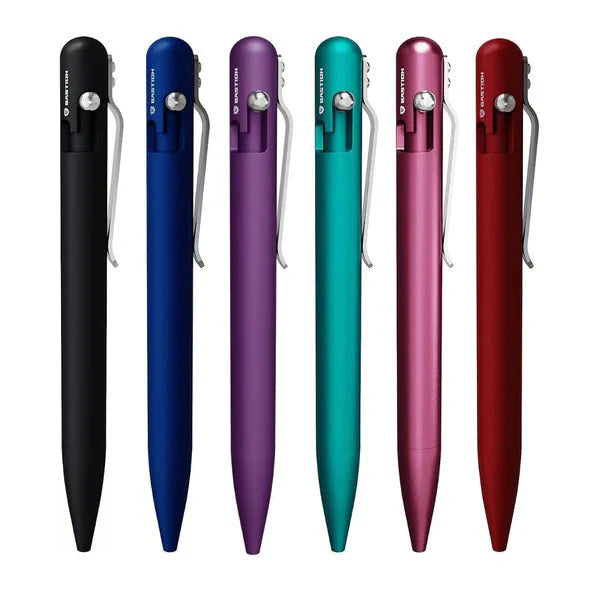
The pen matters more than people expect. If writing by hand feels like work, you will skip it. A pen with a smooth refill and a deliberate deploy turns the start of the session into a small ritual. Click the bolt, take a breath, write the first line. The Aluminum Bolt Action Pen at $29.99 is a light, easy entry point. The bolt mechanism gives you a physical cue that you are switching modes, from input to reflection.
If you want to test your current handwriting and get feedback on what your writing reveals about your focus and emotional state, the free worksheets and AI analysis at bastionhandwriting.com are a good place to start. First credit is free.
What if I don't know where to start?
Use this three-step starter for the first week.
- Morning, two minutes. Write one sentence about how you slept and one sentence about what you're anxious about today.
- Midday, three minutes. Brain dump anything looping in your head. No structure.
- Night, two minutes. Write three specific things from the day that went well, even small ones.
Seven minutes total. After a week, extend the morning session to five minutes and add a Pennebaker-style 15-minute session once a week.
If you want to go deeper on the practice of writing pages by hand each morning, see our piece on morning pages.
What journaling is not
It's not therapy. It's not a diagnosis. If anxiety is interfering with sleep, work, or relationships, talk to a clinician. Journaling works alongside professional care, not instead of it.
It also doesn't have to be deep every day. Some days the entry is "tired, foggy, drank too much coffee, going to bed early." That counts. The practice is the point.
Read more
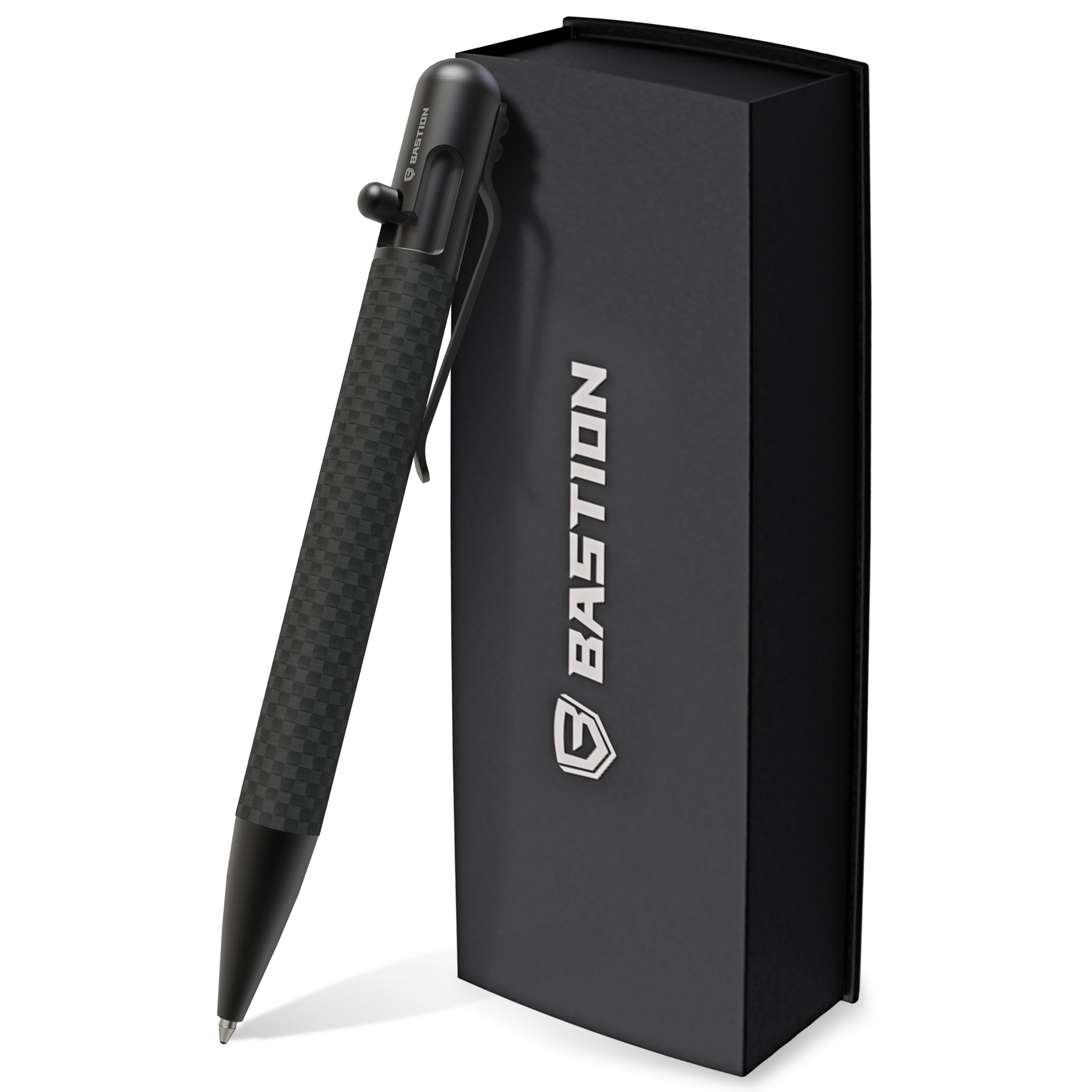
Four materials, four very different pens. The choice changes how the pen feels in your hand, how it ages, and how much you pay. This guide breaks down titanium, stainless steel, aluminum, and carb...
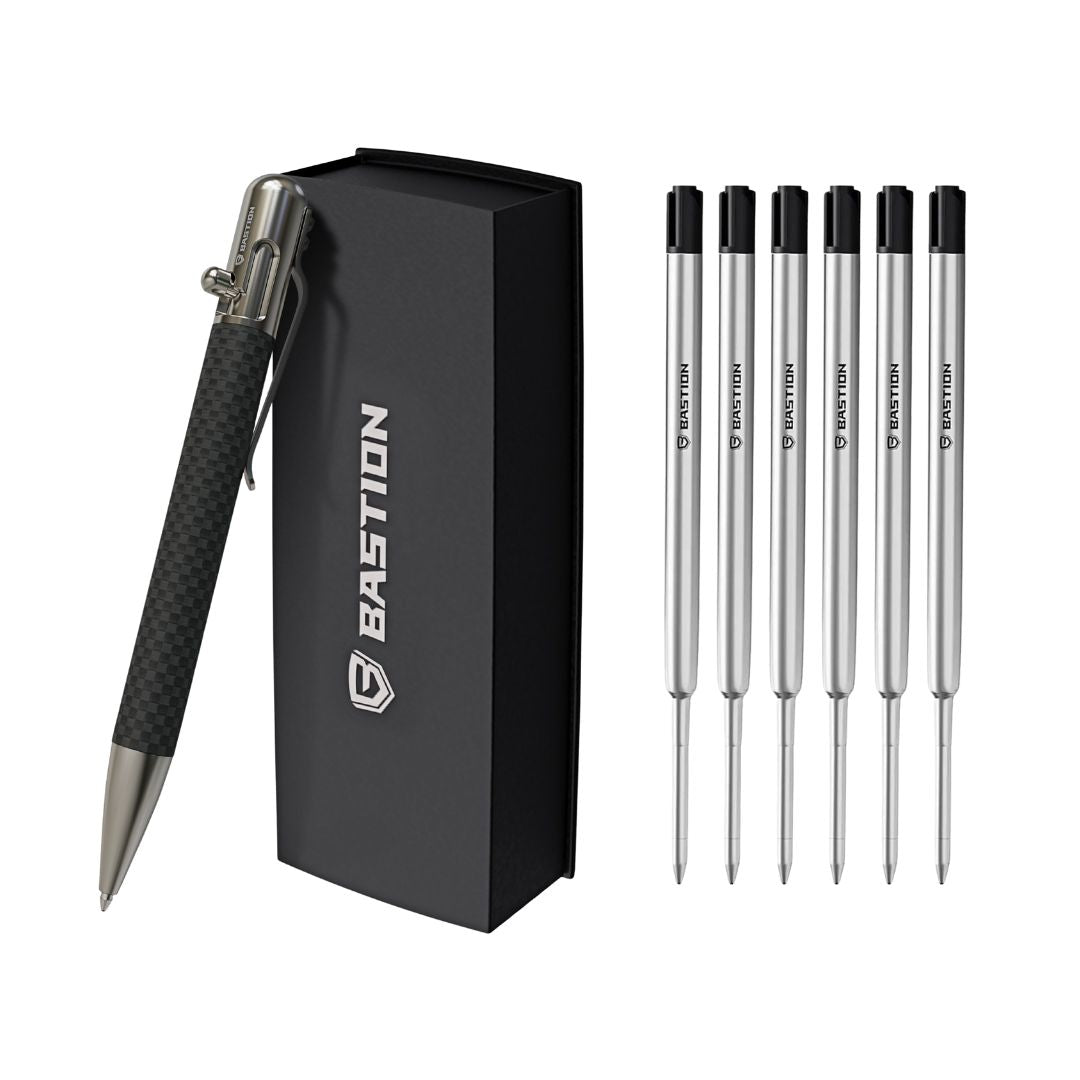
Father's Day lands on June 21 this year. If your dad still uses the same scratched-up pen from a 2017 hotel front desk, you have 31 days to fix that. This guide covers picks at every price point, ...