
Titanium vs Stainless Steel vs Aluminum vs Carbon Fiber Pen: Material Guide
Four materials, four very different pens. The choice changes how the pen feels in your hand, how it ages, and how much you pay.
This guide breaks down titanium, stainless steel, aluminum, and carbon fiber across weight, durability, corrosion resistance, feel, aging, and price. Then it picks the right one for each kind of buyer.
What are the four main bolt action pen materials?
Aerospace aluminum, SUS 304 stainless steel, Ti-6Al-4V Grade 5 titanium, and 3K carbon fiber weave over a stainless core. Each one is a real spec, not a marketing label.
Aluminum is the lightest. Stainless steel is the densest of the four. Titanium gives the best strength to weight ratio. Carbon fiber here is a weave overlay on a stainless steel barrel, not a solid composite tube.
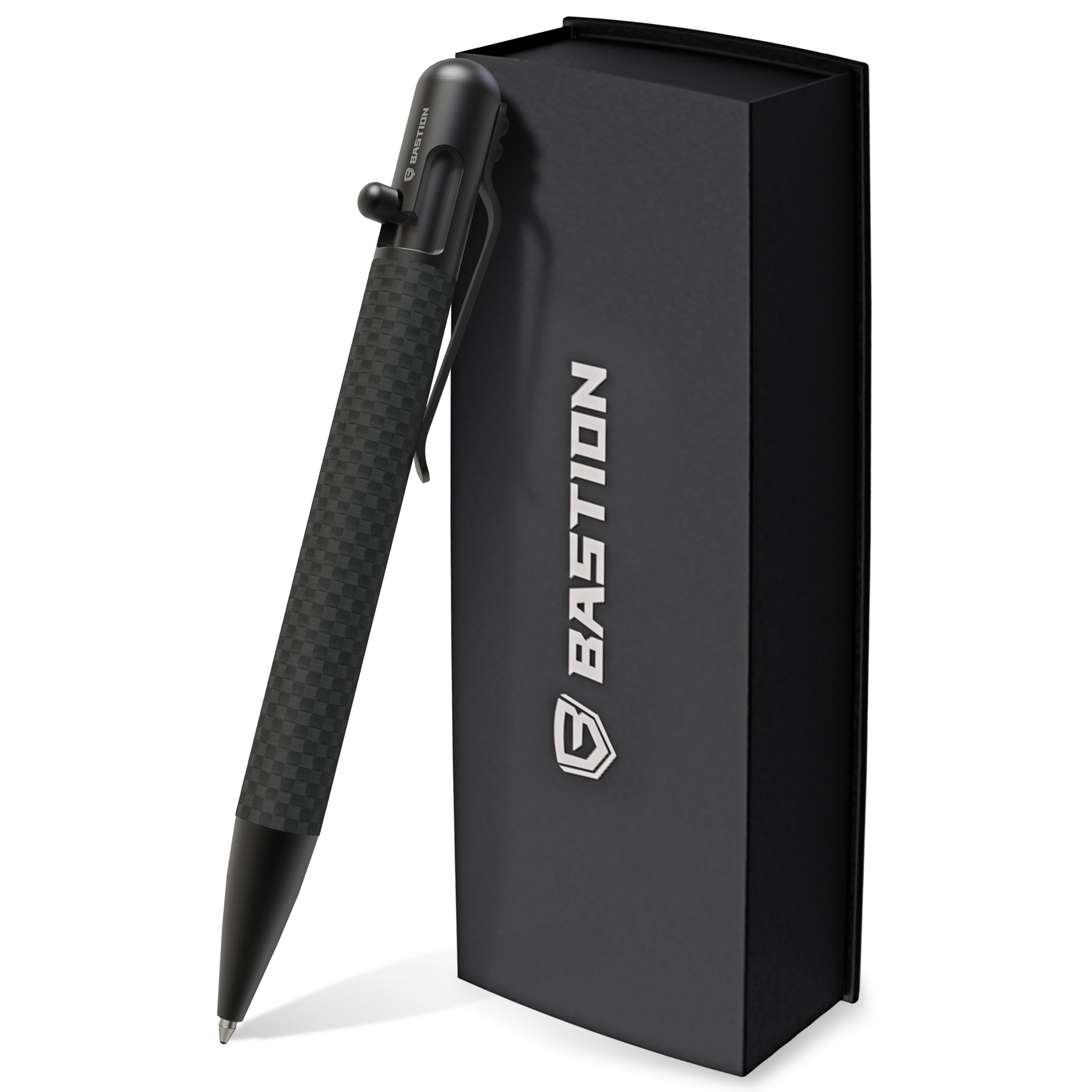
That last point matters. A lot of pens call themselves "carbon fiber" and use a thin sticker or wrap. The Carbon Fiber and Stainless Steel pen uses a real 3K weave bonded to a stainless core, which is why it costs and weighs more than a pure aluminum body.
How do the materials compare by weight, durability, and price?
Here are the specs for the Bastion line in one table.
| Material | Spec | Weight | Length | Price | Reg Price |
|---|---|---|---|---|---|
| Aluminum | Aerospace, anodized | 1.3 oz | Standard | $29.99 | $69.99 |
| Stainless Steel | SUS 304 | Heaviest | Standard | $44.99 | $88.99 |
| Carbon Fiber + SS | 3K weave on SS barrel | Heavier than aluminum | Standard | $54.99 | $152.88 |
| Titanium | Ti-6Al-4V Grade 5 | 1.6 oz | 5.25 in | $54.99 | $170.88 |
All four use Parker G2 refills, ship free over $35, and are covered by Bastion's lifetime warranty.
Which material is most durable?
Titanium wins on strength to weight, stainless steel wins on raw impact resistance, and aluminum wins on cost-to-toughness for daily use. Carbon fiber sits in the middle because the weave is the cosmetic layer over a stainless body.
Titanium does not deform under normal use, does not corrode in sweat or rain, and barely scratches. It is the material aerospace and medical implants use for good reason.
Stainless steel is harder to dent than aluminum. SUS 304 handles years of pocket carry without rounding off at the edges. It also takes a polish back to near-new with a quick rub.
Aluminum is more than tough enough for normal writing and pocket carry. Drop it on concrete from belt height and you might pick up a scuff. That is the trade for the lower weight and the lower price.
Which material handles corrosion and sweat best?
Titanium is the best, stainless steel is excellent, aluminum is good as long as the anodized layer stays intact, and the carbon fiber pen inherits the stainless core's resistance.
If the pen lives in a back pocket, in a gym bag, or on a humid worksite, titanium and stainless steel handle that environment without surface change. The Stainless Steel pen is the most forgiving for sweat-heavy users.
Anodized aluminum is rated for daily use, but if the color coat gets chipped through to the base metal, that spot can dull over time. Treat it like a watch case, not a tool.
How do the materials feel in the hand?
Aluminum feels light and quick. Stainless steel feels planted and serious. Titanium feels premium because the weight does not match the visual size. Carbon fiber feels textured under the fingertips.
If you write for hours, lighter pens reduce hand fatigue. The Aluminum pen is the easiest for long sessions.
If you like a pen that anchors in your hand, stainless steel is the move. The weight pulls down on the paper and the strokes feel more controlled.
Titanium splits the difference. Heavier than aluminum, lighter than stainless steel, and the surface has a slightly warmer feel against the skin. Carbon fiber adds grip because the weave breaks up the smooth barrel.
How does each material age over time?
Stainless steel and titanium age the best, aluminum holds up if the anodizing stays clean, and carbon fiber stays bold as long as the weave is protected from sharp impact.
Stainless steel develops micro-scratches that look like patina rather than damage. Most owners prefer the look after a year of carry to the day-one finish.
Titanium can be re-anodized in patterns, which is why the Limited Edition Titanium drops show such deep color shifts. The base metal under the color is essentially immortal for pen use.
Anodized aluminum holds color well unless it takes a hard hit on an edge. Carbon fiber stays sharp visually for years, and the stainless core does the structural work.
Which material is right for you?
Match the pen to the carry. Here is the short version.
- Lightweight daily carry, color options, entry price: Aluminum at $29.99.
- Classic professional, weighty feel, best long-term aging: Stainless Steel at $44.99.
- Motorsport and gear-collector aesthetic, visible weave: Carbon Fiber and Stainless Steel at $54.99.
- Ultralight premium, strength to weight, color-shift potential: Titanium at $54.99, or step up to the Limited Edition Titanium at $97.
If you want a deeper head-to-head on the two most popular metals, the titanium vs stainless steel EDC comparison goes another layer deep.
What is the best all-around pick?
For most buyers, stainless steel is the safest pick. It is the flagship, it ages well, it carries the right weight for everyday writing, and it lands in the middle of the price range.
For gift buyers, aluminum at $29.99 is the easy yes. With BOGO50, two pens come in under the price of one premium model.
For the buyer who wants the standout pen on the desk, titanium or a limited edition titanium drop is the right shelf. Light in the hand, heavy on presence, and built to outlast the rest of the gear in the pocket.
Read more
Pull out a bolt action pen in a meeting and watch what happens. Someone leans over. Someone asks to hold it. Someone wants to know where you got it. This is the part of owning one that surprises n...
Pull out a bolt action pen in a meeting and watch what happens. Someone leans over. Someone asks to hold it. Someone wants to know where you got it. This is the part of owning one that surprises n...