

Carbon Fiber Bolt Action Pen: Is It Worth the Upgrade?
Carbon fiber sounds like overkill for a writing tool. It's the stuff of F1 chassis, supercar body panels, and jet wings. So when you see a carbon fiber bolt action pen on a product page, the fair question is: does the material actually do anything for the way you write, or is it just a finish you pay extra for?
We get this question a lot. Here's the honest answer.
What Carbon Fiber Actually Is
Carbon fiber is a composite. Long, thin filaments of carbon, each thinner than a human hair, woven into sheets and bonded with resin. The most common pattern you'll see on premium goods is "3K" weave, meaning each tow contains 3,000 individual filaments. That tight crosshatch pattern is what gives carbon fiber its signature look.
It was developed for aerospace in the 1960s. By the 1980s it was on F1 cars. Today, McLaren, Ferrari, and Lamborghini wrap their chassis in it because the strength-to-weight ratio is unmatched. A carbon fiber panel is stiffer than steel and a fraction of the weight.
That same material, in the same 3K weave, is what wraps the barrel of the Bastion Carbon Fiber + Stainless Steel Bolt Action Pen.
Why Bastion Pairs Carbon Fiber With Stainless Steel
Most "carbon fiber" pens on the market are solid composite. That sounds premium, but solid carbon fiber has a problem: it's brittle in small diameters. Drop a thin, solid carbon fiber barrel on a hard floor and you risk a hairline crack. Once the resin is compromised, the pen's done.
Bastion engineered around that. The barrel is machined SUS 304 stainless steel. The carbon fiber is a thin 3K tube overlaid on top, seamlessly bonded so you can't feel a transition between the metal endpoints and the woven middle. You get the visual of carbon fiber and the structural integrity of steel underneath.
It's the same logic supercar makers use when they wrap an aluminum subframe with a carbon fiber shell. The carbon does the looking; the metal does the load-bearing.
How It Writes Compared to Stainless Steel
Weight is where you'll feel the difference most.
- Stainless Steel Bolt Action Pen: heaviest in the lineup, dense in the hand, balanced toward the bolt
- Carbon Fiber + Stainless Steel: slightly lighter than full stainless because the overlay replaces a thin layer of metal with composite
- Aluminum Bolt Action Pen: the lightest at 1.3 oz with refill, made for long writing sessions where weight fatigues your hand
If you've ever written for thirty minutes straight with a heavy pen, you know fatigue is real. The carbon fiber version sits in the middle. It still has the planted, premium feel of metal, but it doesn't tire your hand the way solid steel can on a long journaling session.
The bolt action mechanism is identical across the lineup. Same precision-machined click, same Parker G2 refill compatibility, same lifetime warranty. The barrel is the variable.
What Owners Actually Say
The Bastion Carbon Fiber + Stainless Steel Bolt Action Pen averages 4.92 out of 5 stars across 542 Judge.me reviews. Common themes from verified buyers:
- The seamless transition between the steel ends and the carbon fiber tube. Reviewers expect a visible seam and don't find one.
- The weave is tight and consistent. No fuzzy fibers, no resin pooling.
- The pen reads as premium when handed to colleagues. Several reviewers note that people ask about it.
The most common criticism in the broader bolt action category is the same one Bastion gets too: a stiff bolt out of the box. We address that head-on in our break-in guide. The mechanism loosens with use.
Is the Upgrade Worth It?
Three honest scenarios.
You write a lot. Carbon fiber's weight reduction matters over a long session. If you journal in the morning or take pages of meeting notes by hand, the lighter barrel is a real ergonomic upgrade over solid stainless steel.
You want a conversation piece. The weave catches light differently than brushed metal. People notice it. If you sign documents in client meetings or hand your pen to someone for a signature, the carbon fiber finish does work that brushed steel doesn't.
You're a materials person. If you've owned carbon fiber goods before, a wallet, a watch, a phone case, you already know the appeal. A pen made from the same composite class as an F1 chassis is the kind of detail that compounds with the rest of your everyday carry.
If you primarily care about writing performance and you don't mind the weight, the Stainless Steel Bolt Action Pen at $44.99 is still the flagship. It's where Bastion started. It's the most precisely machined of the line.
If you want lightweight first, color options, and the lowest entry into the bolt action mechanism, the Aluminum Bolt Action Pen at $29.99 makes more sense.
The Carbon Fiber + Stainless Steel Bolt Action Pen at $54.99 sits in a specific lane: you want the writing feel of metal, less weight than solid steel, and a finish that nods to motorsport engineering. For that buyer, yes, it's worth it.
Specs at a Glance
- Barrel: SUS 304 stainless steel core, 3K carbon fiber overlay
- Length: 5.25 in
- Refill: Parker G2 standard, 100+ compatible options
- Mechanism: precision-machined bolt action, lifetime warranty
- Reviews: 4.92/5 average across 542 Judge.me reviews
- Price: $54.99 (regularly $152.88)
For the full carbon fiber pen breakdown, see our materials guide. To compare every Bastion material side by side, browse the full bolt action collection.
Browse all available Bastion bolt action pens for material and price comparisons.
Explore the complete Bastion guide
Read more
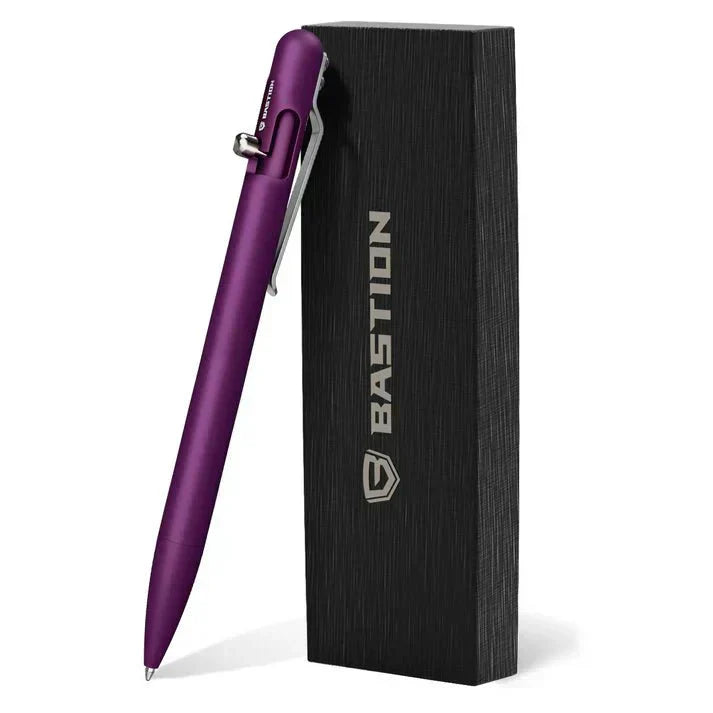
An EDC pen should be reliable, durable, and comfortable enough for field tasks. Many pens on the market either feel too fragile for long-term daily use, especially for individuals who depend on con...

If you have ADHD, you already know the conference room move. The clicker pen. Tap, tap, tap. Someone shoots you a look. You stop. Two minutes later, your hand finds the cap of a different pen and y...